MOBI and AZW3: Getting a Book Out of One Ecosystem and Into Another
Amazon's formats, the open standard, and the one thing no converter can do for you. What travels between them, what reflows, and where DRM stops the conversation.
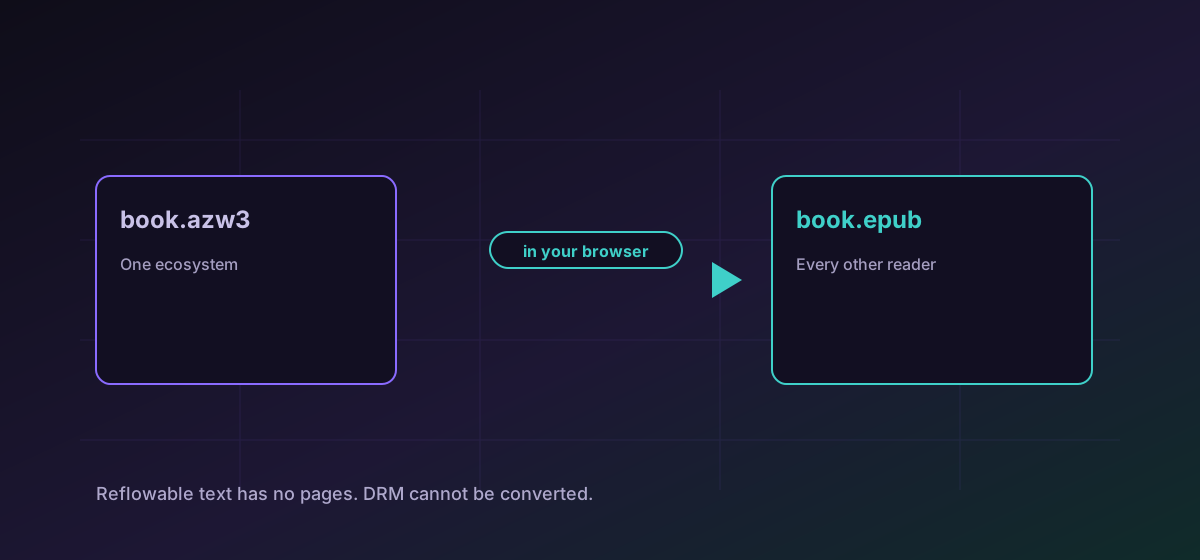
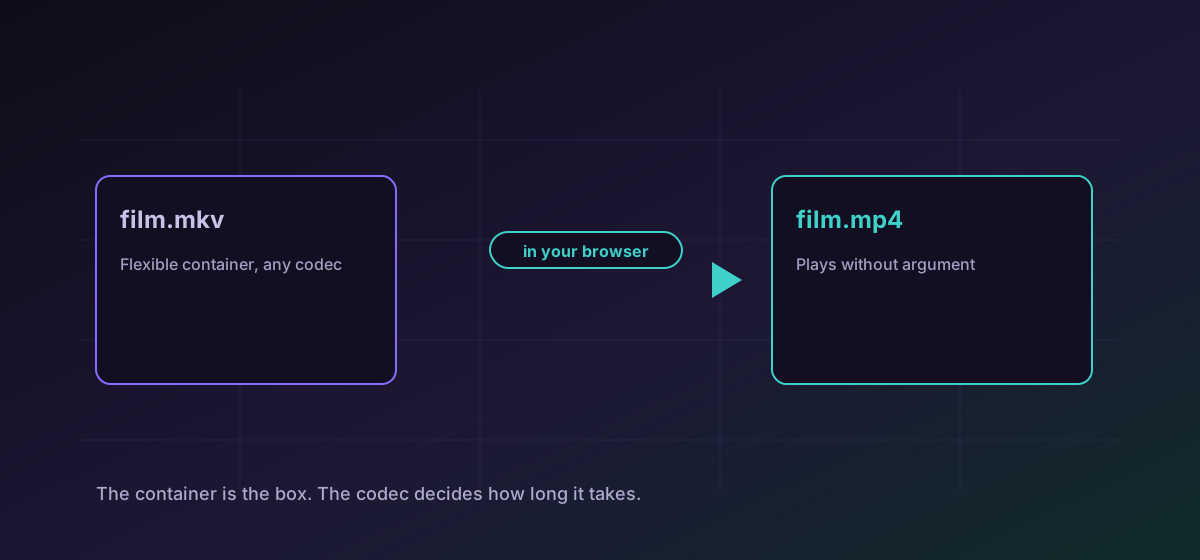
Ebook formats are a small family with one large complication. MOBI and AZW3 are Amazon's; EPUB is the open standard everything else reads. Converting between them is straightforward, and there is exactly one case where it is not possible at all.
Start with the limit#
What each format is#
- EPUB is the open standard, and underneath it is a ZIP of XHTML and CSS. That is why it is the best archival choice: in the worst case you can open it and read the markup.
- MOBI is the older Amazon format, descended from Mobipocket. It is being retired and turns up mostly in older libraries.
- AZW3, also called KF8, is the newer Amazon format with much better CSS support and therefore much better layout.
- FB2 is FictionBook, common in Russian-language collections, and a single XML file rather than an archive.
The useful direction is almost always toward EPUB: convert MOBI to EPUB, convert AZW3 to EPUB, or convert FB2 to EPUB. From there every non-Kindle reader will open it.
Reflowable text does not have pages#
This is the conceptual thing worth internalising. An ebook is not a PDF. The text reflows to fit the screen, the font size and the margins, so page numbers are a property of the reading session rather than of the book. Two people reading the same EPUB have different page counts.
That is why converting an EPUB to PDF is a meaningful loss of flexibility rather than a neutral format change: it fixes the layout to one page size forever. Do it when a book must be printed or filed, not to make it more portable. Convert EPUB to PDF when that is genuinely what you want.
What survives, and what to check#
- Text and structure travel reliably. Chapters, headings and paragraphs are the core of the format.
- The table of contents usually survives and is worth checking first, because a broken one makes a long book unusable.
- Cover images normally travel; embedded fonts sometimes do not.
- Complex layout, fixed-format children's books and heavily designed technical titles are where conversion struggles most.
If the goal is plain text for searching or quoting, convert EPUB to TXT strips everything and leaves the words. The wider document picture is in documents to PDF and EPUB.
Troubleshooting
It is most likely protected with DRM, which means it is encrypted. That is not something this site removes; the routes here are for unprotected files.
Check it first after any conversion. Navigation is stored separately from the text and is the part most likely to need rebuilding in an ebook editor.
Embedded fonts do not always survive, and readers substitute. For reflowable text this is usually cosmetic rather than a problem.
Fixed-layout titles convert worst. A children's picture book or a designed technical title may need rebuilding rather than converting.
Frequently asked questions
Can I convert a book I bought from Amazon?
Only if it is unprotected. Most store purchases carry DRM, which encrypts the file; removing that is a separate act with legal consequences that vary by country, and it is not done here.
Which format should I keep my library in?
EPUB. It is the open standard, every non-Kindle reader opens it, and underneath it is a ZIP of XHTML you can read directly if all else fails.
Why does my ebook have no page numbers?
Because reflowable text has none. Pages depend on screen size, font size and margins, so they are a property of your reading session rather than of the book.
Should I convert my ebooks to PDF?
Only if they must be printed or filed at a fixed size. A PDF locks the layout to one page shape, which is a real loss of flexibility rather than a neutral change of container.
Is my book uploaded anywhere?
No. Conversion runs in your browser, which matters both for an unpublished manuscript and because what a person reads is unusually revealing.